What began as a partnership between a timberland owner and an eager young forester has grown into one of the nation’s most recognized and trusted forest resource advisers. Throughout our history, we have been committed to our clients’ success, grown in experience & capability, and remained a firm with the highest standard of excellence.
1900 – 1929: Germination
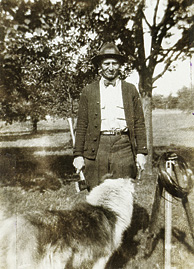
After graduating in 1909 from the University of Maine with a B.S. in forestry, George T. Carlisle moves to Boston and starts a small forestry consulting business. Eight years later, George T. returns to Maine to manage the land of a wealthy landowner. While developing an excellent reputation and growing a solid client base, he meets Henry Prentiss, a third-generation timberland owner and businessman.
In 1924, the two join up to form Prentiss & Carlisle and to manage land for a variety of clients, including several long-standing timberland owning families. Henry Prentiss is elected president and George T. is elected treasurer. Also in 1924, George Banzhaf founds forest resource advisory firm Banzhaf & Watson, later to incorporate as George Banzhaf & Co., which will be acquired by Prentiss & Carlisle in 2005.
1930 – 1949: Our Roots Grow
The depression hits, productivity slows, and wood prices drop. To combat the difficult times, Prentiss & Carlisle diversifies its business into producing regional maps and selling them to sporting goods stores and outfitters.
George T. Carlisle becomes president of P&C after the death of Henry Prentiss in 1933. Several years later, George D. Carlisle joins his father’s company after graduating from the University of Maine, also with a forestry degree. George D.’s responsibilities include cruising timberland, harvesting, surveying, and overseeing river drives.
Leading up to World War II, P&C oversees the harvest of “defense wood,” small-sized white birch that is formed into cones to protect the noses of large-caliber artillery shells during shipment overseas.
In an effort to help ease the costs of operations for its clients, many of whom are facing rising taxes, P&C uses its forest management experience to expand into the logging services business in 1942.
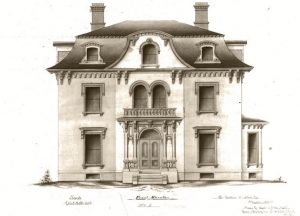
In 1947, Prentiss & Carlisle purchases and restores the William Augustus Blake House in Bangor, which is still the home of its offices today. Twenty-seven years later, this building will be entered on the National Register of Historic Places.
1950 – 1969: Forming Branches
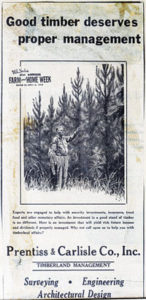 By the early 1950s, P&C’s total landholdings are in excess of 90,000 acres, and timberland in Maine is now selling for between $7 and $10 per acre. At the same time, the harvesting industry welcomes the introduction of the hydraulic clamshell bucket, a new type of pulpwood loader. This new machine adds significant productivity, efficiency, and safety in the woods. In 1960, George T. Carlisle dies suddenly at his home and is remembered in the community for his outstanding contributions to the field of forestry. Subsequently, George D. Carlisle is elected P&C’s vice president and treasurer.
Prentiss & Carlisle’s operations continue to expand in the 1960s with the opening of several new facilities. In 1963, the company purchases property in Enfield, Maine, to open a wood yard and house its Harvest Operations division. Later, in 1966, P&C opens another yard—the company’s fourth—in Newport, Maine. Originally intended for purchasing pulpwood in the region, this site will be expanded several times over the years to serve as a sawmill, and eventually become a utility pole peeling facility.
1970 – 1989: Industry Leadership
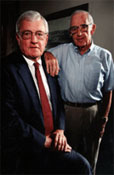
P&C helps establish the Allagash Wilderness Waterway in northern Maine, one of the state’s first public conservation efforts, by selling strips of land along the Allagash River. In 1974, David Carlisle returns to Bangor from Boston, where he was vice president at the State Street Bank & Trust, and takes over as P&C’s treasurer. In 1982, he is elected president of P&C.
Large-scale outbreaks of the spruce budworm, one of the most destructive insects to the northern forest, initiates massive salvage operations of spruce and fir within Maine during the late 1970s and early 1980s.
As P&C celebrates its 60th anniversary, the company continues to invest in its growth, adding significant acreage to its ownership portfolio through acquisitions and strategic exchanges. Computerized drafting and P&C’s first GIS (Geographic Information System) are adopted to improve capability and client service.
1990 – 2009: Evolution
 P&C begins to direct market the bulk of its forest products, rather than selling wood on the stump, which had been the customary method of selling timber in Maine. In 2000, David Carlisle retires as president. Don White, who had served as the company’s treasurer, is elected president.
The company’s Woodlot Management Services division, designed to service the needs of smaller landowners with custom forestry services, is established. Tom Nelson, following in his father’s footsteps, is promoted to vice president to head up the new endeavor.
As a testament to its commitment to long-term sustainable management of its forests, Prentiss & Carlisle receives FSC® (FSC-C016109) Forest Management Certification on the lands that it manages.
2010–Present Day
 Representing the fourth generation of family involvement at Prentiss & Carlisle, Ben Carlisle moves from Boston to Bangor in 2010 and joins the company as vice president. He is later elected president of the company in 2013.
The company goes international, opening offices in Quebec City and Sault Ste. Marie, Ontario, and managing nearly 300,000 acres in Canada through a Canadian subsidiary. Later, Prentiss & Carlisle acquires Upland Forestry, growing its staff and experience and expanding its management operations into New York, New Hampshire, and Vermont.
The company, the industry, and the community all mourn the loss of company patriarch George D. Carlisle, who passes away in 2011.
P&C completes the largest land acquisition in its history, purchasing approximately 40,000 acres of timberland in Maine, bringing its total lands under ownership to 140,000 acres.
The company becomes dual-certified, after being certified in its forest management practices in conformance with the Sustainable Forestry Initiative® (SFI®).